Self-Defense, First Aid & Fire Safety at the Zurich Convention Center
From self-defense and first aid to fire safety: the Zurich Convention Center and its CEO, Michel Loris-Melikoff, are committed to preparing all employees for a wide range of situations through regular, comprehensive training in partnership with the JDMT G
Safety Starts with Responsibility
Michel Loris-Melikoff is a passionate event industry professional. In the late 1990s, he transitioned from the financial sector to the events industry. Initially, he organised and produced events himself and served as President of the Street Parade. For the past ten years, he has specialised in venue management, including around three years as CEO of the Zurich Convention Center.
The Zurich Convention Center employs around 80 permanent staff and 380 part-time employees. On average, it hosts 150 to 180 events each year, welcoming between 150,000 and 200,000 attendees. “That's a lot of people,” says Michel Loris-Melikoff. “Naturally, incidents can happen. We deal with everything from minor accidents to rare, more serious medical emergencies.”
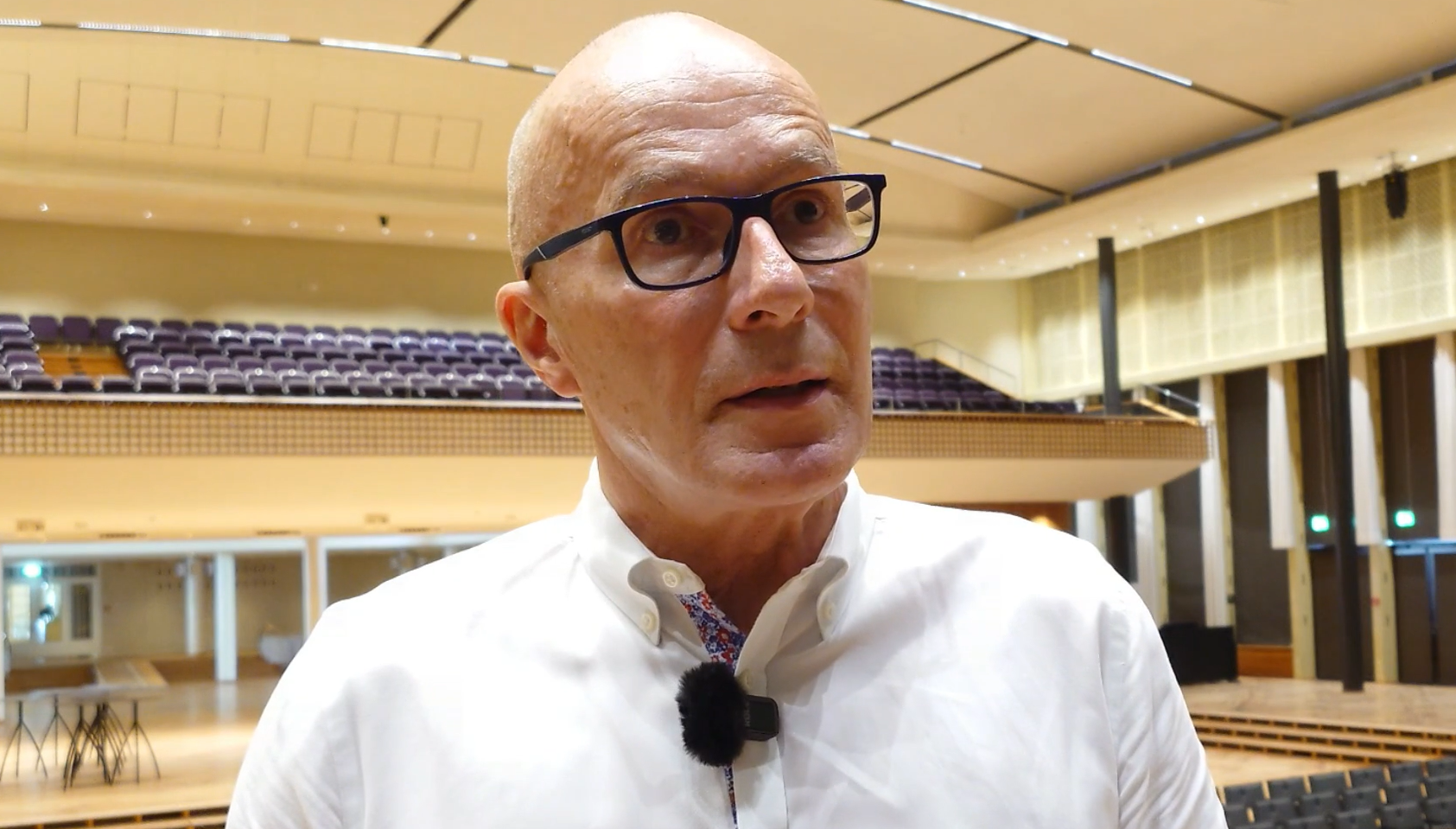
Self-Defense and Awareness
Unpleasant situations can arise in which employees may need to protect themselves. This is why they receive training in self-defense, among other areas. “Unfortunately, we are seeing more and more people who lack basic respect for others and display increasingly aggressive behaviour,” says Michel Loris-Melikoff. “I have a responsibility to ensure that our employees know how to handle such situations. It's not about turning them into police officers, but about helping them develop the right instincts and reactions.”
For him, it is essential that employees know how to respond in these situations, focusing on de-escalation rather than escalation. The CEO knows from personal experience what such situations can feel like. “A few years ago, when I was working in Lausanne, we were conducting an HR meeting when someone suddenly became aggressive – someone we would never have expected to react that way,” he recalls.
When we host a gala dinner with up to 800 guests, it only takes one person to lose control. It can take a minute or two for security to arrive, but our service staff are right there on the front line. We need to prepare them for situations like these.
»Zurich Convention Center Ltd.
This is exactly what Daniel Gassmann from JDMT focuses on. With over 30 years of martial arts experience, he has been running a Krav Maga and self-defense school for the past six years and provides self-defense training for JDMT. “Of course, certain events here also carry potential risks,” he explains. “People may drink too much and behave inappropriately. At VIP events, there are situations where individuals need to be stopped from entering restricted areas. You have to be able to set clear boundaries. In the service industry, female employees may also experience inappropriate physical contact. In these situations, knowing how to de-escalate is essential.”
He teaches these skills to employees at the Zurich Convention Center in training sessions lasting between 90 minutes and two hours. “In that time, we can only cover the basics, but the main goal is to raise awareness of what could happen and how to approach such situations,” he explains. His advice: “Approach every situation with caution, consider what might happen and respond accordingly.”
From his perspective, the potential for dangerous situations is also increasing. “That's why it's important for everyone to engage with this topic. Not everyone needs to become a fighter, but everyone should know how to respond in these situations. We work with schools, home care organisations and municipalities. The key is always personal safety and knowing how to defend yourself, whether facing verbal or physical aggression. Being mentally prepared makes all the difference,” he says.
First Aid and Fire Safety at the Zurich Convention Center
Self-defense is just one of the areas in which employees at the Zurich Convention Center now receive regular, comprehensive and intensive training. Other key topics include first aid and fire safety. These training programmes are overseen by Roger Brüngger, Managing Director of JDMT Training AG and JDMT Equipment & Logistics AG. The courses are tailored to each client's needs, with the most relevant and essential topics defined together. “In first aid, our current focus is on one of the most critical medical emergencies: cardiac arrest,” says Roger Brüngger. “Without proper intervention, it is usually fatal.”
Fire safety training is also adapted to the specific conditions on site. “We assess the firefighting equipment available – what types are there, and where are they located? We then look at how these arrangements can be optimised. Thanks to modern technology, we can conduct fire extinguisher training directly at the Zurich Convention Center. We use a laser-based simulation system that recreates a fire on a screen, complete with visual and sound effects. The fire extinguisher is the same size and weight as a real one, but instead of releasing water or foam, it emits a laser beam that is visible on the screen. If you use it incorrectly, the fire won't go out – and if you stop too soon, it reignites.”
A Holistic Approach to Safety
For Michel Loris-Melikoff, all these areas – from first aid and fire safety to self-defense – are closely connected. “When I first started here, I took a look at the existing safety concept,” he recalls. “My predecessors had produced extensive documentation, so I initially assumed that safety wasn't an immediate priority, as a great deal of thought had already gone into it. After my first few months, things became a little quieter, and I took the time to read through all the documents. That's when I realised that while much of it was theoretically sound and well thought out, some of the measures seemed to have been taken straight from a textbook and probably wouldn't work in practice.”
This realisation became the starting point for a thorough review. He went through all the documentation, questioning whether each measure made sense in practice. For example, is the emergency medical equipment really in the right place if an incident occurs in the concert hall? “That was the kick-off for developing a new safety concept,” he explains. “We are now coordinating with the foundation and the Tonhalle to ensure that we all follow the same procedures and can respond consistently in the event of an emergency.”
Emergency Preparedness: An Ongoing Process That Requires Practice
“You can never be fully prepared,” says Michel Loris-Melikoff. “There is no such thing as absolute safety. But every experience helps you improve. If you properly evaluate and learn from incidents, you become better prepared. That's exactly what we need to achieve here. I would really like to conduct an evacuation drill when the venue is at full capacity, simply to see whether everything we've planned actually works in practice. You can only find that out when the building is truly full.”
Weitere Storys & News


